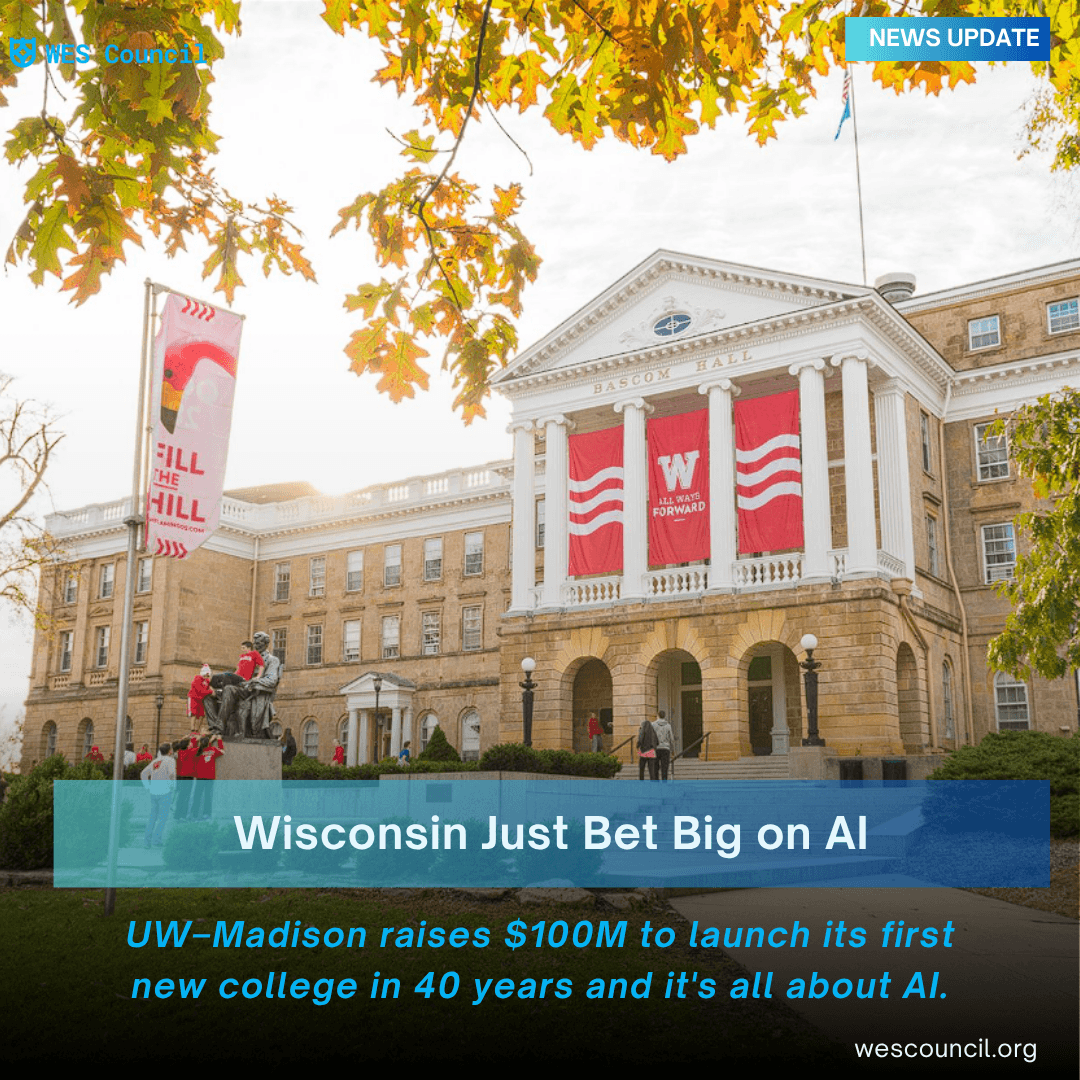

University of Wisconsin–Madison Secures $100 Million for Its Groundbreaking New College of Computing and Artificial Intelligence
In a landmark moment for higher education and the global artificial intelligence landscape, the University of Wisconsin–Madison has announced the receipt of $100 million in private philanthropic commitments to fuel the launch of its new College of Computing and Artificial Intelligence. Scheduled to officially open its doors on July 1, 2026, this college represents far more than a structural change within one of America's most respected public universities — it signals a broader, more urgent reckoning that academia and industry must come together to meet the demands of an AI-powered world. For global organizations working at the intersection of education, innovation, and skilling, this development is as much a call to action as it is a celebration of institutional courage.
This announcement arrives at a critical juncture in history. Artificial intelligence is no longer a peripheral subject tucked away in niche research labs or optional elective courses. It now sits squarely at the center of how institutions, governments, and industries are redefining skill development, career pathways, and intellectual inquiry. At the World Education & Skilling Council (WES Council), we have long championed the cause of integrating technological innovation with structured, high-quality learning — recognizing that the most transformative educational initiatives are those that blend academic rigor with real-world relevance. The announcement from the University of Wisconsin–Madison is a powerful, well-funded affirmation of that exact vision, and it deserves to be understood in full detail by every education leader, policymaker, skilling professional, and learner who cares about where the future of education is headed.
A Historic Investment in AI-Driven Higher Education
The College of Computing and Artificial Intelligence at UW–Madison is not merely a renamed department or a cosmetic reorganization of existing resources — it is the first entirely new academic division to be established at the University of Wisconsin–Madison in more than four decades. The last time the university created a new college was in 1983, making this a genuinely generational milestone, one that signals a deep institutional commitment rather than a passing trend. The University of Wisconsin System Board of Regents formally approved the creation of this college last December, following years of careful groundwork, faculty advocacy, strategic planning, and an intensive fundraising drive that has now culminated in this historic $100 million gift.
The new college will consolidate and amplify an array of existing academic programs already present at UW–Madison. By bringing together well-established degree programs in computer sciences, data science, statistics, library science, and information science under one unified and purpose-built academic umbrella, the university is making a bold institutional statement. Rather than scattering AI-related education across isolated departments, it is creating a dedicated home where interdisciplinary thinking, cutting-edge research, and ethical inquiry can coexist and strengthen one another. This approach recognizes that artificial intelligence is not simply a technical subject — it is a social, philosophical, economic, and ethical challenge that requires a wide range of disciplinary perspectives.
What makes this initiative especially significant is the sheer scale of the financial commitment behind it. The $100 million in private donations, sourced from a broad coalition known as the Catalyst Collective, is designed not to fund bricks and mortar alone, but to accelerate faculty hiring at scale, develop entirely new academic programs and certificates, and build the long-term institutional capacity the college will need to lead globally in AI education. Adding to this, the University of Wisconsin itself has committed to providing more than $50 million annually in institutional investment to sustain and grow the college in the years ahead. Together, these funds represent an extraordinary vote of confidence in the idea that universities must take a proactive, well-resourced role in shaping how AI transforms human society.
For organizations like the WES Council that work daily at the crossroads of education quality, digital skilling, and global standards development, this development functions as both an inspiration and a model worth studying closely. When higher education institutions make this kind of bold, long-term investment in AI literacy and workforce preparation, they set a benchmark that education systems worldwide are challenged to meet. The question is no longer whether AI will reshape education — it already has. The question now is whether educational institutions are bold enough to lead that transformation rather than simply react to it.
The Catalyst Collective — Visionaries Behind the $100 Million Pledge
The group of donors behind this landmark gift is as remarkable as the investment itself. The Catalyst Collective brings together some of the most influential and visionary figures from the worlds of technology, entrepreneurship, healthcare, and finance — individuals who have not only built globally significant companies but who also share a deep, personal commitment to education as a vehicle for societal progress and human advancement.
Among the most notable alumni donors is Andy Konwinski, who co-founded Databricks, one of the world's leading data and artificial intelligence platform companies, as well as Laude and Perplexity AI. Konwinski's participation in this initiative reflects a growing and powerful trend of technology entrepreneurs reinvesting deliberately in the academic institutions that helped launch their careers. His philanthropic commitment is not sentimental — it is strategic, rooted in the understanding that the next generation of breakthroughs in data science, machine learning, and AI will depend heavily on the quality of education that tomorrow's engineers and researchers receive today.
John Morgridge, former chairman and CEO of Cisco Systems — the global networking and technology infrastructure company — and his wife Tashia Morgridge, a retired special education teacher, are also listed among the major contributors. Their combined involvement in this initiative is both symbolic and deeply meaningful. One brings the perspective of a technology executive who understands the competitive and commercial dimensions of AI at the highest levels of industry, while the other brings lived, human experience from classrooms and educational settings. Together, their contribution embodies the kind of whole-person approach to AI education that truly comprehensive programs must strive for. Their generosity, alongside that of Signe Ostby, a former marketing executive, and Jeff Tangney, co-founder and CEO of Doximity — the United States' largest professional network for physicians — rounds out an alumni donor group whose careers span virtually every sector being transformed by AI.
Beyond individual alumni, the corporate world has responded with equal conviction. Scott Cook, co-founder of Intuit — the company behind TurboTax, QuickBooks, and some of the most widely used financial management software products in the world — is counted among the contributors. Equally significant is the involvement of Epic, a Verona, Wisconsin-based healthcare software company that has long maintained strong ties to UW–Madison and the broader Wisconsin academic community. Epic's participation in the Catalyst Collective is not merely a financial gesture — it reflects the kind of deep, ongoing partnership between regional industry and academic institutions that makes large-scale educational investments sustainable, relevant, and impactful over the long term.
This cross-sector model of collaboration — uniting alumni technologists, entrepreneurs, healthcare leaders, educators, and major corporations around a shared educational vision — is precisely the kind of approach that organizations like the WES Council advocate for and celebrate. Education cannot transform at the pace that society needs if it relies solely on government funding or internal institutional resources. The Catalyst Collective demonstrates powerfully that when the vision is bold enough and the stakes are clear enough, the private sector does not wait for others to lead. It steps forward.
Building the College from the Ground Up — What the New Division Will Offer
Establishing an entirely new academic college, even within a well-resourced institution like UW–Madison, is an undertaking of considerable complexity and ambition. The College of Computing and Artificial Intelligence enters the higher education landscape with a clear and urgent mandate: to build an institution that is academically excellent, ethically grounded, deeply interdisciplinary, and directly responsive to the skills and knowledge that society will urgently need in the decades ahead.
Central to this ambition is a planned expansion of the faculty. The university has announced its intention to hire 50 new faculty members in the coming years — a substantial investment in human capital that will allow the college to develop entirely new courses, certificate programs, undergraduate majors, and graduate degree offerings centered on artificial intelligence. These are not standard faculty replacements or routine hires to fill existing vacancies. They are strategic additions carefully chosen to build depth in emerging areas of AI research, ethics, policy, and applied computing. Importantly, many of these new appointments will take the form of joint faculty positions held across multiple departments and schools within the university, ensuring that the college functions as an intellectual hub rather than an isolated silo. This model of embedded interdisciplinarity is critical for a field like AI, where the most pressing challenges demand expertise from law, philosophy, public policy, social science, communications, and the humanities, not just from engineering and mathematics.
The academic foundation on which the new college builds is already strong. UW–Madison's existing programs in computer sciences, data science, and statistics are well-regarded nationally, and the inclusion of library science and information science within the college's scope adds a dimension that is increasingly valuable in the AI era. In a world increasingly shaped by algorithmic decision-making, data curation, and automated information retrieval, the professionals who understand how knowledge is organized, catalogued, retrieved, and evaluated are more essential than ever. Their work directly informs how AI systems are built, how their outputs are interpreted, and how their limitations are understood and communicated to the public.
For the WES Council, whose mission encompasses digital assessment innovation and global skilling standards, this model of AI education resonates deeply. We have consistently maintained that skilling in the modern era must be holistic. Technical expertise alone — while essential — is not sufficient preparation for a world where AI systems are embedded in healthcare decisions, hiring processes, financial judgments, and educational pathways. The workers, researchers, and leaders of tomorrow must understand how to build AI systems and must be equally equipped to question those systems, challenge their assumptions, and hold them to ethical account. The educational architecture that UW–Madison is constructing is one of the clearest institutional expressions of this philosophy that the sector has seen.
Remzi Arpaci-Dusseau — The Founding Dean Shaping the College's Identity
Every ambitious institutional endeavor needs the right leader — someone who combines scholarly credibility, institutional trust, practical vision, and the personal conviction to see a transformative idea through from conception to reality. The University of Wisconsin–Madison has found precisely that person in Remzi Arpaci-Dusseau, who has been appointed as the founding dean of the College of Computing and Artificial Intelligence.
Arpaci-Dusseau holds the distinguished Grace Wahba Professorship in Computer Sciences and has previously served as chair of UW–Madison's Computer Sciences Department — one of the most important academic leadership roles in the university's STEM community. More than anyone else on campus, he is the intellectual architect of this new college. He has spent several years driving the effort to create it, working with university leadership, faculty colleagues, alumni, and corporate partners to build the consensus, the vision, and the financial foundation that have made its launch possible. His fingerprints are on every element of this initiative, from the academic design to the fundraising strategy that produced the Catalyst Collective's historic pledge.
Academically, Arpaci-Dusseau is recognized as a leading expert in computer systems, with a body of research that has produced widely influential contributions in storage systems, operating systems, and distributed computing. He has conducted much of this research in close, sustained collaboration with Andrea Arpaci-Dusseau, his longtime academic partner who also holds a named professorship in computer sciences at UW–Madison. Their partnership represents a model of collaborative scholarly inquiry that the culture of the new college will no doubt reflect.
In the official university announcement of his appointment, Arpaci-Dusseau articulated a vision for AI education that speaks directly to the anxieties and responsibilities of this historical moment. "I'm honored to lead the college at such an important moment; AI is already reshaping society," he stated. "In moments of major change, universities have a responsibility to engage, not stand on the sidelines. Universities have long helped develop technologies, and that work must continue. But we also have a responsibility to ask hard questions about their impacts, guide innovation thoughtfully, and prepare students to thrive in a changing world." These are not ceremonial words meant to mark a press release — they are a philosophical statement about what universities owe to society in an era of technological disruption.
UW–Madison Chancellor Jennifer L. Mnookin offered an equally compelling vision for the college's institutional role. "The College of Computing and Artificial Intelligence is intended to be a hub and resource for the rest of campus, while also building core strength in the disciplines at its foundation," she said. "Helping society navigate a changing landscape, including AI's ethical questions and implications for the workforce, will require collaboration across disciplines, and Remzi brings needed strong and capable leadership to this critical endeavor." The chancellor's emphasis on collaboration, ethics, and workforce implications echoes many of the same priorities that shape the WES Council's approach to education policy and digital skills development globally.
What This Means for the Future of AI Education and Global Workforce Readiness
The establishment of the University of Wisconsin–Madison's College of Computing and Artificial Intelligence carries implications that extend far beyond the borders of one Midwestern American university. It is a compelling signal that the era of treating AI as an elective addition within legacy academic structures is rapidly drawing to a close. Universities across the world are now confronting — and, in the best cases, acting upon — the reality that artificial intelligence requires dedicated institutional investment, specialized and diverse faculty, purpose-designed degree programs, and a campus culture that takes seriously both the extraordinary opportunities and the profound risks that advanced AI presents.
From a workforce readiness perspective, the timing of this initiative could not be more urgent. Across virtually every sector of the global economy — from healthcare and financial services to logistics, agriculture, media, and education itself — artificial intelligence is fundamentally and permanently altering the skills that employers demand and the competencies that workers must develop to remain relevant, productive, and economically secure. Global bodies including the World Economic Forum have consistently and urgently warned that without significant, coordinated investment in AI-related education and large-scale reskilling, the workforce disruptions caused by automation and intelligent systems will deepen inequality, hollow out middle-skill employment, and leave tens of millions of workers without a clear path forward. Institutions like UW–Madison that act early, invest boldly, and build comprehensively are part of the solution to this global challenge.
For the WES Council, which operates at the forefront of digital assessment, global skilling frameworks, and educational quality standards, this development is a powerful validation of the priorities that guide our work. AI education must move decisively from the margins to the center of how we design curricula, assess competencies, award credentials, and prepare the next generation of global citizens. The university's commitment to embedding ethical inquiry, cross-disciplinary collaboration, and applied real-world problem-solving into the very foundation of the new college is a blueprint that education systems, training providers, certification bodies, and policy institutions everywhere should study carefully and adapt for their own contexts.
The combined investment of $100 million in private philanthropy and more than $50 million in annual institutional funding represents what becomes possible when stakeholders from academia, industry, and civil society align behind a shared and clearly articulated understanding of what education must become. It is a reminder that in a period of profound and rapid technological transformation, the institutions — universities, councils, training bodies, governments — that invest boldly in knowledge creation, that do so with intention and ethical grounding, and that build inclusive pathways for learners from all backgrounds, will be the ones that help shape an AI future that works for all of humanity, not just a privileged few.
As artificial intelligence continues to reshape the way we learn, work, collaborate, create, and make decisions, it will take precisely this kind of courageous, well-funded, and thoughtfully led institutional effort to ensure that education not only keeps pace with change, but actively guides it in a humane and equitable direction. The University of Wisconsin–Madison, with its historic new College of Computing and Artificial Intelligence, has taken a decisive and inspiring step forward — and the global education community is watching closely, and learning.